
When I asked Gordon this, he didn’t even let me finish the question before he jumped in.
He said, “There’s nothing staged. Literally nothing. When that timer says ‘go,’ and when that timer says ‘stop,’ that block of time is sacred. There are no shenanigans, no retakes, no recreating anything for camera. That time is competition. We take that part extremely seriously. Everything else you see—the interviews, the talking heads, the commentary—those are done before or after, not during. Sometimes on the longer builds we’ll call a break halfway through so everyone can breathe, grab water, maybe film a couple quick interviews, have some food, but the timer stops. I usually don’t leave those breaks in the final edit because they just don’t make sense in the flow of the story, but they’re real. The competition itself though? Completely legitimate. The timer is real. The rules are real.”
He added, “Even the judge has no idea what’s happening. They’re completely blind. Except for that one time where we tried having the judge watch the whole thing—that was an experiment, and we won’t be doing that again. Fun to try, but yeah, not happening again. It’ll always be blind from now on.”
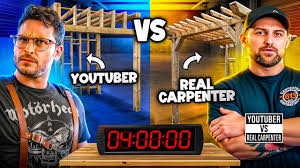



When I asked him about materials, he explained that the goal is always fairness. “The usual structure is two identical piles of materials. You pick what you want to build within the parameters, and both piles have more than enough to do any style you can think of for that type of challenge. Now, we’ve had a couple of the bigger episodes where, because of budget, competitors could request special items. I can’t buy two of everything—we don’t have a million dollars to make an episode—so sometimes someone would ask for something specific. And then the other guy would complain that he didn’t get the same special thing. It turned into chaos. So no more special things. Equal piles only. It keeps it simple and fair. And honestly, when people lose, they get sore. They’ll point out things we didn’t even think about. That actually helps us keep improving the rules so they’re impenetrable. Equal time, equal materials, equal parameters. That’s the formula.”
So I asked him what he says to the people online who comment that it’s rigged.
He said, “They’re just saying that. People say things. Sometimes we edit episodes to look closer than they were because that’s how storytelling works. So the audience thinks it was neck-and-neck when really one person absolutely dominated. But if we showed it exactly as it happened, it might not be as fun to watch. Then people get mad because in their head, the guy who lost ‘almost won.’ But they weren’t there. And some people think I care whether I win or lose. I don’t. I’ve lost before. I want this thing to be bigger than me. This competition is for the entire carpentry community. Carpenters deserve representation, respect, a platform. People watch reality shows where someone cooks a steak. I promise you building a house is harder than cooking a steak—I know, because I cook steaks after building houses. No disrespect to chefs, but what we do deserves a spotlight too.”
I asked him how competitors and judges are chosen. Competitors apply through the JotForm link that’s in every episode description. “Skill level matters,” he told me, “but attitude and availability matter way more. We’re working around the camera crew’s schedule, my schedule, the judge’s schedule, sponsors, materials… so many moving parts. Sometimes we make a shortlist. If you’re worried because you don’t have a million photos of perfect work, don’t be. We’re looking at how you represent yourself and whether you can actually show up.”
For the judges, he keeps it simple. “The judge has to match the challenge. I’m not bringing in someone who tiles bathrooms to judge a staircase. That makes no sense, and it’s not fair to the tradespeople watching at home. And to the people saying I know the judges—yeah, I do, because our industry is small. But they don’t see anything beforehand. They show up on judgment day, they’re handed a scorecard, and that’s it. They have no context. They’re blind for a reason. And honestly? I think some of them want me to lose. Some come in thinking they’re going to pick the other guy just to see me go down. But sometimes they choose the wrong one assuming it’s mine, or they assume it’s the competitor’s when it’s really mine. There’s no way for them to guess. I build something different every single episode, and we flip a coin for which side I’m on, so the judges can’t identify anything.”
Before he wrapped up, he said “My goal has always been to keep this as official and fair as possible. This is one of those things I always wished someone else had done years ago, but now that we’re actually doing it, I understand why nobody did. It is hard. I don’t think TV could do this. I don’t think Netflix could do this. The challenges are too big, the materials are too big, the equipment, the space, the logistics, and honestly the price tag is enormous. That’s why this has to be independent and on YouTube. But I love doing it, and as difficult as it is, I’m not stopping.”
 Bully Media Inc