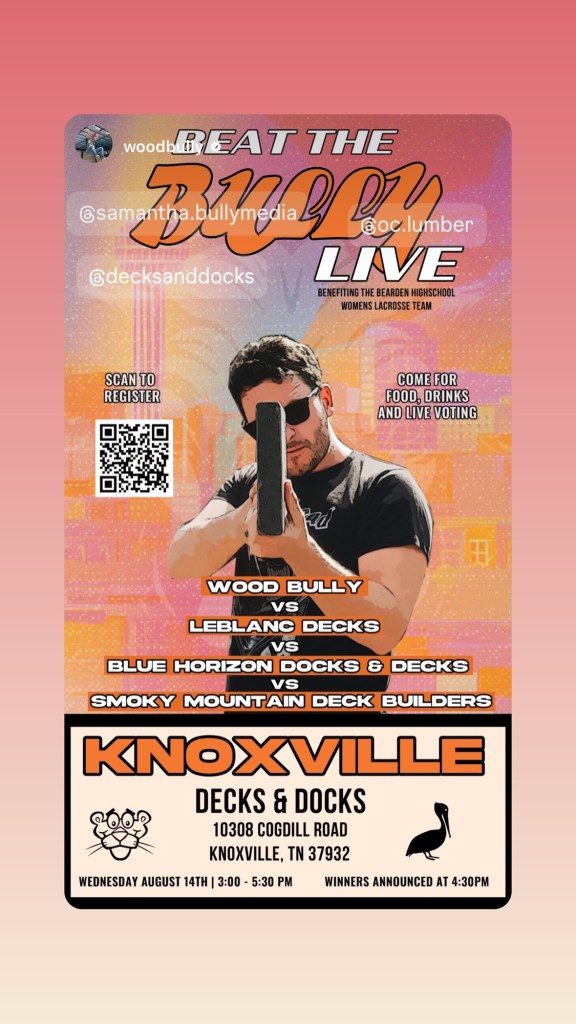
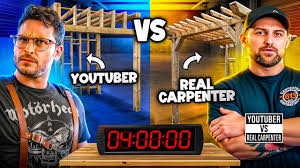
One of the most common comments we receive on our competition videos is that the results are rigged. Sometimes people are joking, but other times they genuinely believe that because I’m the host of the channel, the outcome must somehow be predetermined. The reality is that we’ve spent years trying to do the exact opposite.
When we first started filming these competitions, we didn’t have pages of rules, participant packages, scorecards, waivers, or legal agreements. We were simply a group of builders getting together to have fun, challenge each other, and create entertaining content. Looking back, we probably trusted people a little too much. We assumed that if someone agreed to participate, they understood what they were signing up for. We assumed they would understand that someone had to win, someone had to lose, and that regardless of the outcome, everyone would walk away respecting the process.
For the most part, that’s exactly what happened. We’ve had some incredible competitors over the years, many of whom have become friends. However, it only takes one bad experience to expose weaknesses in a system.
Several years ago, we had a competitor who took a loss far more personally than anyone expected. What was intended to be a friendly competition became something much bigger because they simply could not accept losing publicly. The issue wasn’t that they disagreed with the outcome. People are allowed to disagree. The issue was that they began attempting to undermine the release of the video and create a narrative that the competition itself wasn’t legitimate.
In the end, we chose to remove the video entirely. Not because we were legally required to, and not because we believed the complaints had merit, but because we asked ourselves whether it was worth giving that individual a platform. The answer was no.
That experience changed the way we approached competitions moving forward.
Today, every competitor signs a media release, liability waiver, competition agreement, and additional documentation outlining expectations and responsibilities. Some people may look at that stack of paperwork and assume we’ve become overly cautious, but the truth is that experience taught us where the risks are. Those documents protect everyone involved. They protect us as creators, they protect the competitors, and they protect the integrity of the competition itself.
One of the biggest changes over the years has been our judging process. In the early days, a judge would simply evaluate the finished projects and choose a winner. While that sounds reasonable, it left too much room for speculation. If a judge selected one build over another, viewers and competitors could always claim the decision was based on personal preference rather than objective evaluation.
To address that concern, we developed detailed scorecards that judges are required to complete before a winner is announced. Rather than simply choosing the project they like best, judges must evaluate specific categories such as craftsmanship, execution, creativity, functionality, and overall quality. More importantly, they have to assign scores in each category. The goal isn’t to eliminate subjectivity entirely—because construction and design will always involve some level of personal opinion—but to ensure that every decision is supported by a documented evaluation process.
Another important lesson involved material selection. In the beginning, competitors occasionally requested special products or materials that weren’t included in the original challenge package. At first, we thought this would make the builds more creative. Instead, it created unnecessary complications.
If one competitor requested a specific product and lost, questions would immediately arise about whether the other competitor had access to similar options. Even when both competitors were treated fairly, the perception of unfairness remained. Eventually we realized that allowing different material selections was introducing variables that had nothing to do with skill.
Today, material piles are identical. Tool kits are identical. Fasteners are identical. Both competitors receive the same resources and work within the same parameters. We want the competition to be determined by creativity, planning, craftsmanship, and execution—not by who happened to choose a product, colour, or material that appealed more to the judge.
We have also made a conscious effort to remove any possibility that Gordon receives information before the competitor does. Challenge details, scoring criteria, project parameters, timelines, and expectations are provided to both participants at the same time. If a challenge package is being distributed two weeks before filming, both sides receive the exact same information. If there is a scorecard, both sides see it at the same time. We don’t just want the competition to be fair; we want it to be impossible for anyone to reasonably claim it wasn’t.
Even seemingly minor details have been addressed. The side of the build area that each competitor receives is randomized. Materials are counted and verified. Displays are built to be as identical as possible. Over time, we’ve found that eliminating small points of contention prevents much larger arguments later.
What’s interesting is that many of the rules people see today were never part of the original vision for these competitions. Most of them exist because a situation occurred that forced us to improve the process. Every disagreement, complaint, misunderstanding, and challenge taught us something. In that sense, the competition format has evolved the same way any successful business evolves: by learning from mistakes and continuously improving.
Will people still occasionally claim a result was unfair? Absolutely. That’s the nature of competition. No matter how transparent the process becomes, there will always be someone who disagrees with the outcome.
What matters to us is that the process itself can withstand scrutiny. We don’t expect everyone to agree with every judging decision, but we do want competitors, judges, sponsors, and viewers to know that the winner wasn’t determined by favouritism, special treatment, or hidden advantages. The winner was determined by a process designed to give both competitors the same opportunity to succeed.
At the end of the day, that’s what we’ve been working toward all along. Not a perfect system, because no such thing exists, but a system that is fair, transparent, and able to stand up to criticism. Every rule we have today exists for a reason, and almost every one of those reasons comes from a lesson we learned the hard way.